
Table of Contents
Last updated: December 2025 | Originally published June 2025. Key changes: Registration fees returned to 7% standard rate July 1, 2025; Bëllegen Akt now permanent at €40,000/person; investor-specific tax credit and 6% accelerated depreciation ended in 2024-2025.
Whether to buy an older property that needs renovation or to invest in a brand-new home remains one of the most important decisions facing property buyers in Luxembourg. With Luxembourg’s property market showing signs of stabilization through 2025 and permanent homeownership support now in place, each option presents distinct advantages and challenges. This article explores both paths, with particular attention to the current financial incentives and regulations.
The Financial Perspective: Cost Differences
The most immediate difference between old and new properties is the purchase price. In Luxembourg, older properties are historically 15-20% cheaper than equivalent new properties. This price gap can be substantial, especially in a market known for its high property values.
According to research published by STATEC, apartments under construction are on average between 25% and 30% more expensive than existing apartments of comparable size. This initial saving is often a decisive factor for many buyers, especially first-time homeowners with budget constraints. When considering your options, understanding how to properly evaluate property values becomes crucial for making informed decisions about both new and existing properties.
Purchase timeline considerations:
Old properties: Can be acquired quickly, with sales typically completed within 1-3 months after signing the compromis
New properties: Often involve buying “off plan” (VEFA) with significant waiting periods until completion
Location and Charm: The Old Property Advantage
One of the most compelling reasons to consider older properties is their location. Established neighborhoods in city centers or near amenities often feature predominantly older buildings. This is particularly relevant in areas like Hesperange, where understanding rental costs in Hesperange can help investors evaluate the potential returns from older properties in prime locations.
Location benefits of older properties:
- Greater availability in prime urban locations
- Better proximity to infrastructure (schools, shops, public transport)
- Established neighborhoods with mature amenities
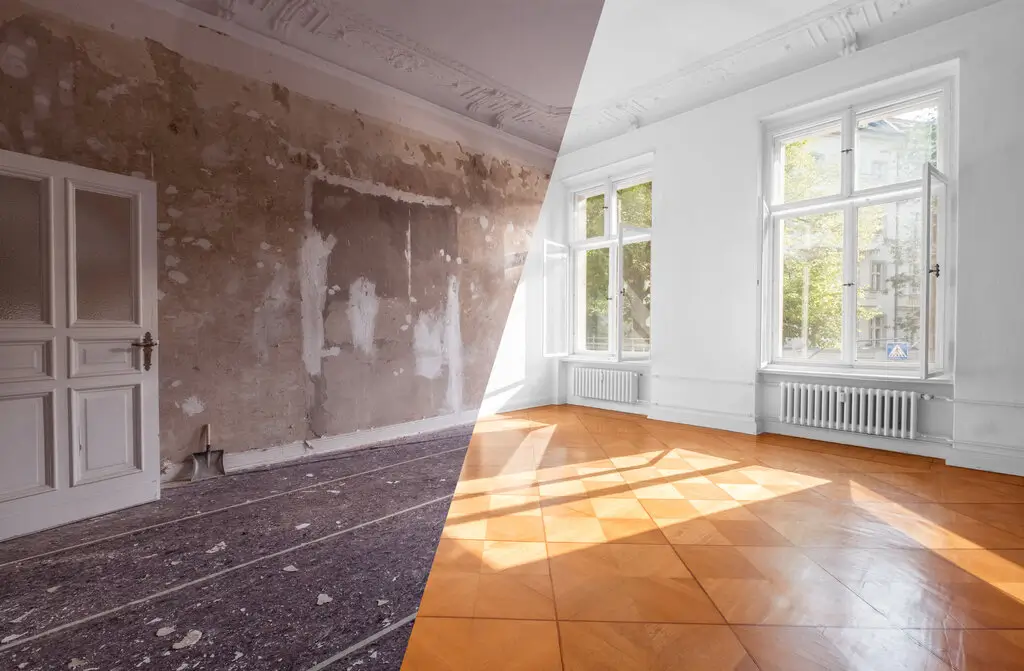
Beyond practical considerations, older properties often possess architectural features that new constructions rarely include: high ceilings with decorative moldings, wooden floors, fireplaces, and other period details that add character and charm. For buyers who value these aesthetic elements, renovating an older property can preserve these features while upgrading the home to modern standards. When preparing such properties for sale, home staging presentation secrets can help highlight these unique characteristics.
The Security of New: Guarantees and Standards
New properties in Luxembourg come with significant protections for buyers, particularly the ten-year guarantee (or decennial liability). This guarantee covers the property for a decade from construction completion, protecting against structural defects and major issues.
Since January 1, 2017, all new buildings in Luxembourg must meet passive house construction standards and achieve AAA energy efficiency classes. This triple A rating corresponds to optimum energy efficiency, thermal insulation, and environmental impact, with energy consumption being virtually zero (NZEB = Nearly Zero Energy Building).
New constructions also incorporate the latest energy efficiency standards, modern wiring, plumbing, and heating systems, potentially leading to lower utility costs and maintenance expenses in the initial years of ownership.
Renovation Subsidies: Making Old New Again
Luxembourg offers extensive financial support for renovating older properties, making this option increasingly attractive. These subsidies aim to improve both habitability and energy efficiency, and understanding these housing financial subsidies can significantly impact your renovation budget.
The Klimabonus Scheme
For buildings older than 10 years, the Klimabonus program provides substantial financial aid for energy efficiency renovations. The scheme can cover up to 62.5% of an energy renovation project. This subsidy applies to various renovation projects:
- Insulation of roofing, external walls, and floor slabs
- Window replacements
- Installation of controlled ventilation systems
- Installation of technical systems that utilize renewable energy sources
The 25% Klimabonus increase for renovation measures (including controlled mechanical ventilation) applies to applications for “accord de principe” submitted by December 31, 2025, with both accord de principe and invoice dates determining eligibility.
Housing Improvement Subsidy
The improvement subsidy for older homes can cover up to 40% of renovation costs for properties older than 10 years. This aid is means-tested, with the amount varying according to income and family situation.
Eligible work includes:
- Roof repairs or replacement
- Drying out damp walls
- Bathroom and toilet installations
- Heating system installations or renovations
- Window replacements and façade renovations
VAT Reduction for Renovations
Luxembourg applies a super-reduced VAT rate of 3% (instead of the standard 17%) for renovation work on primary residences. This ongoing housing measure is limited to €50,000 per housing unit and applies to most renovation work, though some exclusions exist (such as fitted kitchens and landscaping). The 3% rate is subject to eligibility conditions and potential claw-back if property use changes within 10 years.
Current Financial Landscape (December 2025)
Registration Fees
As of July 1, 2025, standard registration fees of 7% apply to all property purchases. The temporary 50% reduction (to 3.5%) that was available from October 1, 2024 through June 30, 2025 has expired. For both new and older properties, buyers should budget the full 7% registration fee plus 1% transcription fee in their acquisition costs.
Permanent “Bëllegen Akt” Tax Credit
Excellent news for primary residence buyers: the “Bëllegen Akt” tax credit was made permanent at €40,000 per person (€80,000 for couples) effective July 1, 2025. This permanent enhancement applies to both new and older properties intended as primary residences, providing substantial and ongoing support for homeownership without time pressure from expiring deadlines.
Energy-Efficient Property Benefits
Properties with high energy efficiency ratings (particularly A+ energy class) continue to benefit from preferential treatment, including better mortgage rates from banks (up to -0.4 point discount). Both new properties (which must meet AAA standards by law) and renovated older properties achieving high ratings can access these benefits.
Investor Incentives (Updated December 2025)
The specialized investor tax credit (Bëllegen Akt Investisseurs) of €20,000 per person for VEFA purchases ended December 31, 2024 and is no longer available. Similarly, the 6% accelerated depreciation measure for new construction investments ended September 30, 2025.
However, standard depreciation benefits remain available: 2% annually for rental properties, with accelerated 4% rates for properties completed less than five years ago (limited to two properties per taxpayer or four for couples).
Understanding the broader context of lease contracts and tenant rights becomes important for investors considering rental properties, whether new or renovated.
December 2025 Cost Reality Check
To illustrate the actual cost differences in December 2025, here’s a realistic comparison:
Scenario: Comparable 120m² apartments in Hesperange
Older property renovation path:
- Purchase price: €500,000
- Registration + transcription (8%): €40,000
- Renovation costs: €100,000
- Subtotal: €640,000
- Less: Bëllegen Akt credit (couple): -€80,000
- Net investment: €560,000
- Plus: Klimabonus subsidy potential: up to €62,500 (62.5% of €100k renovation)
- Effective cost after subsidies: ~€497,500
New property purchase path:
- Purchase price: €625,000 (25% premium typical)
- Registration + transcription (8%): €50,000
- Renovation: €0
- Subtotal: €675,000
- Less: Bëllegen Akt credit (couple): -€80,000
- Net investment: €595,000
Cost difference: ~€97,500 in favor of renovating older property (with maximum subsidies applied)
This example demonstrates that even with standard 7% registration fees (not the expired 3.5% temporary reduction), renovating an older property can offer significant savings, particularly when renovation subsidies are maximized.
Making Your Decision: Key Considerations
When deciding between a new property and renovating an older one, consider whether to sell privately or with a real estate agent if you’re also selling an existing property to fund your purchase.
For old property renovation:
- Initial purchase cost is lower, but renovation expenses must be factored in
- Extensive subsidy options available specifically for renovation (Klimabonus, improvement subsidy, 3% VAT)
- Greater control over final design and specifications
- Preservation of character and architectural features
- Typically better locations in established neighborhoods
- Potential for significant savings with proper planning and subsidy maximization
For new property purchase:
- Higher initial cost but no immediate renovation expenses
- Better energy efficiency standards from the outset (AAA mandatory)
- Legal guarantees against defects for 10 years
- Modern layouts and amenities
- Less maintenance in early years
- Immediate move-in capability
- No renovation project management required
Documentation and Process Considerations
Regardless of which option you choose, proper documentation is essential. Having all your documents needed for a sale organized from the start can streamline the process. For those selling an existing property to fund their new purchase, following a comprehensive property sale checklist ensures nothing is overlooked.
Understanding when to sell your property can help optimize the timing of both your sale and new purchase, especially when coordinating renovation timelines or new construction completion dates.
Conclusion: Which Option Offers Better Value?
The answer depends largely on your priorities and situation. Renovating an older property typically offers better value in terms of location, character, and potentially long-term investment returns, especially with Luxembourg’s generous renovation subsidies. With the permanent €40,000/person Bëllegen Akt credit and Klimabonus subsidies covering up to 62.5% of energy renovations, the financial case for renovation remains compelling in December 2025.
New properties offer convenience, modern standards, and legal guarantees, but at a premium price. They may be preferable for those who value immediate move-in readiness and don’t want the uncertainty of renovation projects.
With the permanent Bëllegen Akt credit now in place and generous renovation subsidies continuing through the Klimabonus program, both options remain financially viable for December 2025 buyers. The decision should be based on your personal priorities—location and character versus modern convenience—rather than artificial deadline pressure.
For comprehensive guidance on navigating either path, our selling property in Luxembourg guide provides valuable insights into the complete property transaction process.
The decision ultimately rests on your personal preferences, budget constraints, and long-term housing goals. The current financial landscape, with permanent support mechanisms in place, allows you to make this choice based on what truly matters to you rather than racing against expiring incentives.
For personalized guidance on your property purchase or renovation journey, including detailed market analysis, renovation cost estimates, and professional support throughout the process, contact zeas.immo. Our expertise in the Hesperange area and broader Luxembourg market ensures you receive the insights needed to make the right choice for your situation.



 English
 Français
 Deutsch
Join The Discussion