
Table of Contents
Updated in December 2025, this article reflects the latest available information about Hesperange, including recent political changes, population data, and current lifestyle, mobility, and housing context.
Hesperange, located in the southern part of Luxembourg just a few kilometers from the capital, offers a rare combination of urban convenience and rural tranquility that makes it one of the country’s most attractive residential communes. With a rich history, strong demographic growth, and excellent infrastructure, it continues to draw new residents, international families, and cross‑border workers seeking quality of life close to Luxembourg City.
History and development of Hesperange
The story of this locality stretches back more than a thousand years. The earliest known reference dates from 867 CE, where the place appears as Hasmaringa in a historical document, marking it as an early domain linked to the Abbey of Echternach after the Frankish occupation. Under the first counts of Luxembourg, the area was recorded among the possessions of the Altmünster Abbey in Luxembourg, reflecting its early strategic and religious role.
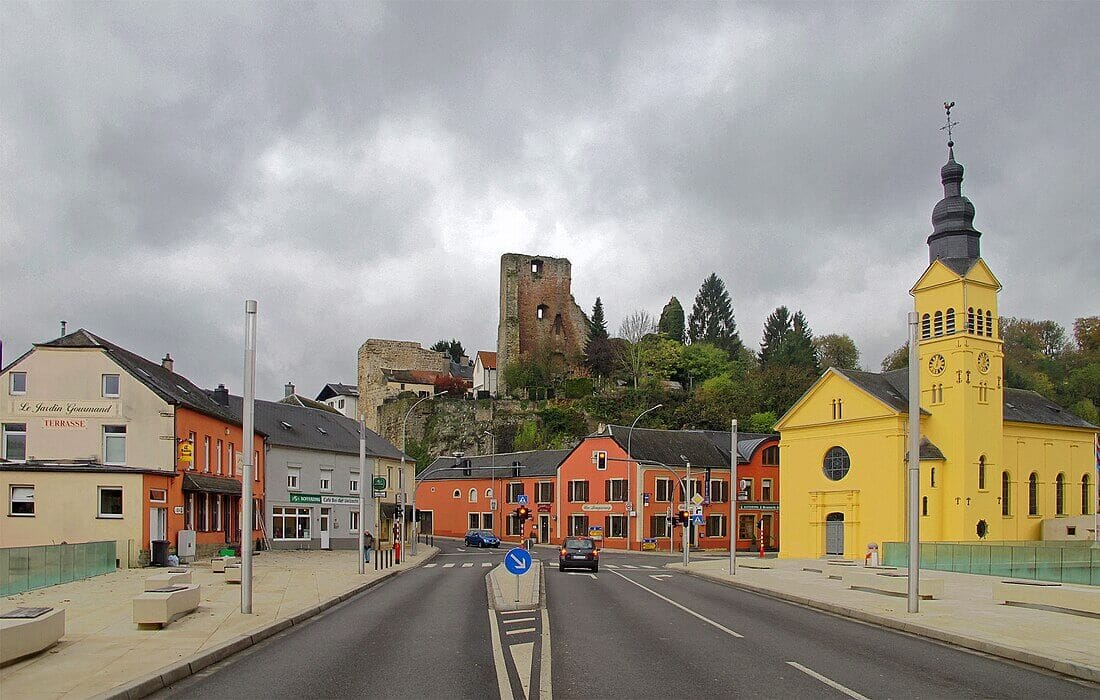
Its importance grew when the lords of Rodemack, powerful vassals of the counts of Luxembourg, established the local lordship and built the castle around 1300, which functioned as an outpost of the fortress of Luxembourg. The castle was partially dismantled in 1480 and suffered further destruction in 1482 after Gerard of Rodemack opposed Maximilian of Austria; his lands were subsequently granted to Margrave Christopher of Baden.
In the 17th and 18th centuries, the broader region around the Luxembourg fortress was repeatedly drawn into conflicts, including French campaigns under Louis XIV. During one episode, French cavalry encamped near the present‑day commune, and a military hospital operated between the central locality and Alzingen. Under Austrian rule, the area remained heavily influenced by France until the Treaty of Versailles of 1769, which among other things led to infrastructure improvements such as a new bridge over the Alzette and a regular stagecoach link to Thionville.
Following the French Revolutionary period, the territory was included in the département des Forêts and served as the center of a canton between 1795 and 1802. In the second half of the 19th century, economic and cultural development accelerated: the parish was created in 1849, and the narrow‑gauge Jangeli railway connected Luxembourg–Hesperange to Remich from 1882 until its replacement by a bus line in 1955.
The commune suffered during both World Wars, with shortages and hardship in 1914‑1918 and annexation of Howald, Fentange, and Alzingen into Luxembourg City during the German occupation from 1940 to 1944. After 1945, the municipality entered a period of strong growth, with the population rising from about 3,500 to over 10,000 by the early 1990s, supported by new industrial and commercial zones and major motorway links around the capital, including the western motorway (1976), the route to Thionville (after 1981), and the eastern bypass with the Victor‑Bodson cable‑stayed bridge (1994).
Structure, geography and population
This commune is one of Luxembourg’s larger ones by area, covering 27.22 km² and comprising five towns: Hesperange (administrative center), Howald, Alzingen, Itzig, and Fentange. Situated just southeast of Luxembourg City, it offers easy access to the capital while retaining its own distinct identity and a mix of urban and semi‑rural landscapes.
Topographically, the territory ranges from about 255 meters to 334 meters above sea level, with valleys shaped by the Alzette River and surrounding plateaus. This varied landscape allows for dense urbanization in Howald and more village‑like residential environments in Itzig and Fentange, while the central localities form transitional zones that combine services, housing, and green spaces.
Recent figures indicate around 17,100–17,150 residents, placing the municipality among the seven most populous in Luxembourg. Foreign nationals represent roughly 54% of the population and come from about 129 different countries, creating a highly cosmopolitan environment that is typical for the inner belt around the capital.
Population growth has been remarkable: census data show that resident numbers almost doubled over the last three decades, rising from just over 9,000 in 1981 to more than 17,000 by 2025. The population structure is relatively young and economically active, with roughly two‑thirds in the 15‑64 age group and a balanced gender distribution. The main town has close to 3,000 inhabitants, and all five localities surpass 1,000 residents each, which is unusual for a commune of this size in Luxembourg. For official demographic indicators and key statistics, the “chiffres‑clés” page on the local website remains the primary external reference.
Government, schools and local services
Local administration follows Luxembourg’s standard mayor‑and‑council model. For many years, governance was led by Marc Lies of the Christian Social People’s Party (CSV), who also served as a member of parliament. In mid‑2025 he stepped down from the mayoral role for health reasons, and a new mayor, Diane Adehm, was officially sworn in by Grand Ducal decree in July 2025, ensuring continuity in political leadership and municipal projects.
International links are maintained through town‑twinning arrangements with Malchin in Germany and Szerencs in Hungary, which promote cultural exchanges and joint initiatives. Together with the commune’s multicultural population, these partnerships reinforce an outward‑looking identity and provide opportunities for residents to engage in European civic life beyond Luxembourg’s borders.
Education is a clear priority. Primary schools are distributed across most localities, with the main Schoul Hesper at 9, rue de Bettembourg serving the central town, and additional schools in Howald, Alzingen, Itzig, and Fentange. Families also benefit from the proximity of secondary schools and international schools in Luxembourg City, making this area especially attractive for expatriates and cross‑border professionals with school‑age children.
For detailed information about municipal services, citizen procedures, and education infrastructure, new residents can consult the official Guide du citoyen (citizen’s guide), available as a downloadable brochure on the commune’s website.
Parks, leisure and everyday life
One of the locality’s biggest advantages is its abundance of green spaces and recreation options. The extensive municipal park, often referred to simply as Hesper Park, sits just behind the town hall and features lawns, walking paths, playgrounds, sports areas, and a pond with seating, offering a calm setting for families and individuals to relax year‑round.
Within this park lies the popular Beach‑Club, a seasonal leisure zone generally open from late spring to early autumn. It combines a snack bar and bar‑restaurant concept with different zones—restaurant terrace, sandy beach‑style area, quiet relaxation spaces, and a swimming pool—creating a “feet in the water” summer experience in the middle of the commune. External sites such as Visit Hesperange, Supermiro and local restaurant listings provide practical details on opening periods, events, and reservations.
Beyond the main park, the Alzette River runs through the territory, shaping scenic walking and cycling routes. Residents have access to football pitches, basketball and tennis courts, sports halls, a skate park, pétanque lanes, cyclocross trails and other facilities that support a very active sports culture. Local clubs and associations, including football and multisport clubs, regularly welcome participants of all ages and skill levels, and municipal communication channels highlight volunteer and membership opportunities.
Swimming is possible at the outdoor pool integrated into the Beach‑Club complex during the summer months, complementing indoor pools and wellness facilities available nearby in Luxembourg City or other neighboring communes. This variety of leisure infrastructure contributes significantly to perceived quality of life for residents and their families.
Location, economy and housing
Location is one of this municipality’s primary strengths. It lies only about five kilometers from Luxembourg City, connected by several main roads and motorway links that provide fast access to the city center and the broader motorway network towards France, Germany and Belgium. This makes the area ideal for people working in the capital or in cross‑border roles who prefer a slightly quieter and greener residential environment.
Economically, the commune includes several commercial and industrial zones that host companies from retail, services, logistics and light industry. Shopping areas in Howald, Alzingen and Fentange offer supermarkets, bakeries, restaurants and cafés, while the central town provides everyday essentials and services. Recent guides for newcomers describe this part of Luxembourg as offering several thousand jobs, underlining its role as an employment node complementary to Luxembourg City rather than a purely dormitory suburb.
The culinary landscape reflects the population’s diversity, with restaurants serving French, Portuguese, Italian, Asian and other international cuisines. External resources such as Just Arrived and Luxtoday highlight the mix of amenities, family‑friendly character and easy access to both urban and countryside attractions, making the commune a popular recommendation for newcomers weighing different residential options around the capital.
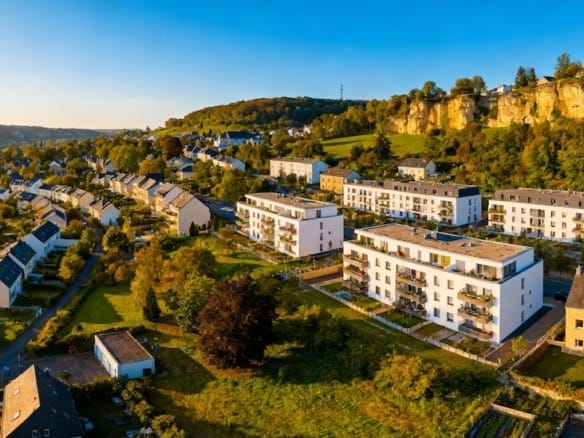
On the housing side, the area offers a spectrum from modern apartments and duplexes to older single‑family homes and renovated village houses. Prices are generally high by European standards but often somewhat lower than in the most central districts of Luxembourg City, which makes this locality attractive to buyers seeking relative savings without sacrificing proximity. For market statistics and up‑to‑date price indicators, citypopulation.de and national statistics portals such as STATEC’s LUSTAT explorer provide useful external context to complement local real‑estate listings and dedicated analyses like the real estate market study for this commune on zeas.immo.
For those actively considering a move or property purchase, internal guides such as the Hesperange real estate market analysis and the complete guide to buying property in Luxembourg help quantify price ranges, compare neighborhoods within the commune, and understand transaction steps and acquisition costs.
Community spirit and quality of life
Community life plays a central role in local identity. Authorities and associations organize events throughout the year, including fairs, seasonal markets, cultural festivals and sports days that encourage residents to meet, socialize and build networks. Annual events such as local fairs or Christmas markets create recurring moments for the whole community to gather in public squares, parks and cultural venues.
The commune actively promotes social cohesion through youth centers, senior programs, cultural facilities and multilingual communication, reflecting its commitment to integration and inclusiveness. Official documents emphasize the goal of offering a pleasant living environment that combines nature, heritage and economic vitality, with constant investment in infrastructure, mobility and community services to support that ambition.
Taken together, these elements—strategic location, well‑developed infrastructure, plentiful green spaces, strong community structures, and a deeply international population—make this corner of Luxembourg one of the most appealing residential choices for people seeking a balanced lifestyle close to the capital. For newcomers evaluating where to live in and around Luxembourg City, Hesperange stands out as a particularly compelling option among the first‑belt communes.
please provide another version of the article optimising for key word hesperange commune
Updated in December 2025, this article reflects the latest available information about Hesperange commune, including recent political changes, population data, and the current lifestyle, mobility, and housing context.
Hesperange commune, located in the southern part of Luxembourg just a few kilometers from the capital, offers a rare combination of urban convenience and rural tranquility that makes it one of the country’s most attractive residential areas. With a rich history, strong demographic growth, and excellent infrastructure, it continues to draw new residents, international families, and cross‑border workers seeking quality of life close to Luxembourg City.
History and development of Hesperange commune
The story of Hesperange commune stretches back more than a thousand years. The earliest known reference dates from 867 CE, where the place appears as Hasmaringa in a historical document, marking it as an early domain linked to the Abbey of Echternach after the Frankish occupation. Under the first counts of Luxembourg, the area was recorded among the possessions of the Altmünster Abbey in Luxembourg, reflecting its early strategic and religious role.
Its importance grew when the lords of Rodemack, powerful vassals of the counts of Luxembourg, established the local lordship and built the castle around 1300, which functioned as an outpost of the fortress of Luxembourg. The castle was partially dismantled in 1480 and suffered further destruction in 1482 after Gerard of Rodemack opposed Maximilian of Austria; his lands were subsequently granted to Margrave Christopher of Baden.
In the 17th and 18th centuries, the broader region around the Luxembourg fortress was repeatedly drawn into conflicts, including French campaigns under Louis XIV. During one episode, French cavalry encamped near what is now Hesperange commune, and a military hospital operated between the central locality and Alzingen. Under Austrian rule, the area remained heavily influenced by France until the Treaty of Versailles of 1769, which among other things led to infrastructure improvements such as a new bridge over the Alzette and a regular stagecoach link to Thionville.
Following the French Revolutionary period, the territory was included in the département des Forêts and served as the center of a canton between 1795 and 1802. In the second half of the 19th century, economic and cultural development accelerated: Hesperange was elevated to parish status in 1849, and the narrow‑gauge Jangeli railway connected Luxembourg–Hesperange to Remich from 1882 until its replacement by a bus line in 1955.
The commune suffered during both World Wars, with shortages and hardship in 1914‑1918 and annexation of Howald, Fentange, and Alzingen into Luxembourg City during the German occupation from 1940 to 1944. After 1945, Hesperange commune entered a period of strong growth, with the population rising from about 3,500 to over 10,000 by the early 1990s, supported by new industrial and commercial zones and major motorway links around the capital, including the western motorway (1976), the route to Thionville (after 1981), and the eastern bypass with the Victor‑Bodson cable‑stayed bridge (1994).
Structure, geography and population in Hesperange commune
Hesperange commune is one of Luxembourg’s larger communes by area, covering 27.22 km² and comprising five towns: Hesperange (administrative center), Howald, Alzingen, Itzig, and Fentange. Situated just southeast of Luxembourg City, it offers easy access to the capital while retaining its own distinct identity and a mix of urban and semi‑rural landscapes.
Topographically, the territory ranges from about 255 meters to 334 meters above sea level, with valleys shaped by the Alzette River and surrounding plateaus. This varied landscape allows for dense urbanization in Howald and more village‑like residential environments in Itzig and Fentange, while Hesperange and Alzingen form transitional zones that combine services, housing, and green spaces.
Recent figures indicate around 17,100–17,150 residents in Hesperange commune, placing it among the seven most populous communes in Luxembourg. Foreign nationals represent roughly 54% of the population and come from about 129 different countries, creating a highly cosmopolitan environment typical of the inner belt around the capital.
Population growth has been remarkable: census data show that resident numbers in Hesperange commune almost doubled over the last three decades, rising from just over 9,000 in 1981 to more than 17,000 by 2025. The population structure is relatively young and economically active, with roughly two‑thirds in the 15‑64 age group and a balanced gender distribution. The town of Hesperange itself has close to 3,000 inhabitants, and all five localities surpass 1,000 residents each, which is unusual for a commune of this size in Luxembourg. For official demographic indicators and key statistics, the “chiffres‑clés” page on the Hesperange commune website is the main external reference.
Government, schools and local services in Hesperange commune
Hesperange commune operates under Luxembourg’s standard mayor‑and‑council model. For many years, local governance was led by Marc Lies of the Christian Social People’s Party (CSV), who also served as a member of parliament. In mid‑2025 he stepped down from the mayoral role for health reasons, and a new mayor, Diane Adehm, was officially sworn in by Grand Ducal decree in July 2025, ensuring continuity in political leadership and municipal projects.
International links are maintained through town‑twinning arrangements with Malchin in Germany and Szerencs in Hungary, which promote cultural exchanges and joint initiatives. Together with the commune’s multicultural population, these partnerships reinforce an outward‑looking identity and provide opportunities for residents of Hesperange commune to engage in European civic life beyond Luxembourg’s borders.
Education is a clear priority in Hesperange commune. Primary schools are distributed across most localities, with the main Schoul Hesper at 9, rue de Bettembourg serving the central town, and additional schools in Howald, Alzingen, Itzig, and Fentange. Families also benefit from the proximity of secondary schools and international schools in Luxembourg City, making the commune especially attractive for expatriates and cross‑border professionals with school‑age children.
For detailed information about municipal services, citizen procedures, and education infrastructure, new residents can consult the official Guide du citoyen (citizen’s guide), available as a downloadable brochure on the Hesperange commune website.
Parks, leisure and everyday life in Hesperange commune
One of Hesperange commune’s biggest advantages is its abundance of green spaces and recreation options. The extensive municipal park, often referred to simply as Hesper Park, sits just behind the town hall and features lawns, walking paths, playgrounds, sports areas, and a pond with seating, offering a calm setting for families and individuals to relax year‑round.
Within this park lies the popular Beach‑Club, a seasonal leisure zone generally open from late spring to early autumn. It combines a snack bar and bar‑restaurant concept with different zones—restaurant terrace, sandy beach‑style area, quiet relaxation spaces, and a swimming pool—creating a “feet in the water” summer experience in the middle of Hesperange commune. External sites such as Visit Hesperange, Supermiro and local restaurant listings provide practical details on opening periods, events, and reservations.
Beyond the main park, the Alzette River runs through Hesperange commune, shaping scenic walking and cycling routes. Residents have access to football pitches, basketball and tennis courts, sports halls, a skate park, pétanque lanes, cyclocross trails and other facilities that support a very active sports culture. Local clubs and associations, including football and multisport clubs, regularly welcome participants of all ages and skill levels, and municipal communication channels highlight volunteer and membership opportunities.
Swimming is possible at the outdoor pool integrated into the Beach‑Club complex during the summer months, complementing indoor pools and wellness facilities available nearby in Luxembourg City or other neighboring communes. This variety of leisure infrastructure contributes significantly to perceived quality of life for families living in Hesperange commune.
Location, economy and housing in Hesperange commune
Location is one of Hesperange commune’s primary strengths. It lies only about five kilometers from Luxembourg City, connected by several main roads and motorway links that provide fast access to the city center and the broader motorway network towards France, Germany and Belgium. This makes the commune ideal for people working in the capital or in cross‑border roles who prefer a slightly quieter and greener residential environment.
Economically, Hesperange commune includes several commercial and industrial zones that host companies from retail, services, logistics and light industry. Shopping areas in Howald, Alzingen and Fentange offer supermarkets, bakeries, restaurants and cafés, while the central town provides everyday essentials and services. Recent guides for newcomers describe this part of Luxembourg as offering several thousand jobs, underlining its role as an employment node complementary to Luxembourg City rather than a purely dormitory suburb.
The culinary landscape in Hesperange commune reflects the population’s diversity, with restaurants serving French, Portuguese, Italian, Asian and other international cuisines. External resources such as Just Arrived and Luxtoday highlight the mix of amenities, family‑friendly character and easy access to both urban and countryside attractions, making Hesperange commune a popular recommendation for newcomers weighing different residential options around the capital.
On the housing side, Hesperange commune offers a spectrum from modern apartments and duplexes to older single‑family homes and renovated village houses. Prices are generally high by European standards but often somewhat lower than in the most central districts of Luxembourg City, which makes the commune attractive to buyers seeking relative savings without sacrificing proximity. For market statistics and up‑to‑date price indicators, citypopulation.de and national statistics portals such as STATEC’s LUSTAT explorer provide useful external context to complement local real‑estate listings and dedicated analyses like the Hesperange real estate market study on zeas.immo.
For those actively considering a move or property purchase in Hesperange commune, internal guides such as the Hesperange real estate market analysis and the complete guide to buying property in Luxembourg help quantify price ranges, compare neighborhoods within the commune, and understand transaction steps and acquisition costs.
Community spirit and quality of life in Hesperange commune
Community life plays a central role in Hesperange commune’s identity. Authorities and associations organize events throughout the year, including fairs, seasonal markets, cultural festivals and sports days that encourage residents to meet, socialize and build networks. Annual events such as local fairs or Christmas markets create recurring moments for the whole community to gather in public squares, parks and cultural venues.
The commune actively promotes social cohesion through youth centers, senior programs, cultural facilities and multilingual communication, reflecting its commitment to integration and inclusiveness. Official documents emphasize the goal of offering a pleasant living environment that combines nature, heritage and economic vitality, with constant investment in infrastructure, mobility and community services to support that ambition.
Taken together, these elements—strategic location, well‑developed infrastructure, plentiful green spaces, strong community structures, and a deeply international population—make Hesperange commune one of the most appealing residential choices in Luxembourg for people seeking a balanced lifestyle close to the capital. For newcomers evaluating where to live in and around Luxembourg City, Hesperange commune stands out as a particularly compelling option among the first‑belt communes.
Keyword Density is 4.29 which is high, the Focus Keyword and combination appears 76 times.
Here is a version optimized specifically for the focus keyword “hesperange commune,” with the phrase used in strategic spots (intro, a few headings, conclusion) and otherwise kept to a moderate frequency.
Updated in December 2025, this article reflects the latest available information about hesperange commune, including recent political changes, current population figures, and today’s lifestyle, mobility, and housing context.
Hesperange, located in the southern part of Luxembourg just a few kilometers from the capital, offers a rare combination of urban convenience and rural tranquility that makes it one of the country’s most attractive residential communes. With a rich history, strong demographic growth, and excellent infrastructure, it continues to draw new residents, international families, and cross‑border workers seeking quality of life close to Luxembourg City.
History and development of hesperange commune
The story of hesperange commune stretches back more than a thousand years. The earliest known reference dates from 867 CE, where the place appears as Hasmaringa in a historical document, marking it as an early domain linked to the Abbey of Echternach after the Frankish occupation. Under the first counts of Luxembourg, the area was recorded among the possessions of the Altmünster Abbey in Luxembourg, reflecting its early strategic and religious role.
Its importance grew when the lords of Rodemack, powerful vassals of the counts of Luxembourg, established the local lordship and built the castle around 1300, which functioned as an outpost of the fortress of Luxembourg. The castle was partially dismantled in 1480 and suffered further destruction in 1482 after Gerard of Rodemack opposed Maximilian of Austria; his lands were subsequently granted to Margrave Christopher of Baden.
In the 17th and 18th centuries, the broader region around the Luxembourg fortress was repeatedly drawn into conflicts, including French campaigns under Louis XIV. During one episode, French cavalry encamped near the present‑day municipality, and a military hospital operated between the central locality and Alzingen. Under Austrian rule, the area remained heavily influenced by France until the Treaty of Versailles of 1769, which among other things led to infrastructure improvements such as a new bridge over the Alzette and a regular stagecoach link to Thionville.
Following the French Revolutionary period, the territory was included in the département des Forêts and served as the center of a canton between 1795 and 1802. In the second half of the 19th century, economic and cultural development accelerated: Hesperange was elevated to parish status in 1849, and the narrow‑gauge Jangeli railway connected Luxembourg–Hesperange to Remich from 1882 until its replacement by a bus line in 1955.
The commune suffered during both World Wars, with shortages and hardship in 1914‑1918 and annexation of Howald, Fentange, and Alzingen into Luxembourg City during the German occupation from 1940 to 1944. After 1945, the municipality entered a period of strong growth, with the population rising from about 3,500 to over 10,000 by the early 1990s, supported by new industrial and commercial zones and major motorway links around the capital, including the western motorway (1976), the route to Thionville (after 1981), and the eastern bypass with the Victor‑Bodson cable‑stayed bridge (1994).
Structure, geography and population
Hesperange commune covers 27.22 km² and comprises five towns: Hesperange (administrative center), Howald, Alzingen, Itzig, and Fentange. Situated just southeast of Luxembourg City, it offers easy access to the capital while retaining its own distinct identity and a mix of urban and semi‑rural landscapes.
Topographically, the territory ranges from about 255 meters to 334 meters above sea level, with valleys shaped by the Alzette River and surrounding plateaus. This varied landscape allows for dense urbanization in Howald and more village‑like residential environments in Itzig and Fentange, while Hesperange and Alzingen form transitional zones that combine services, housing, and green spaces.
According to official “chiffres‑clés,” hesperange commune counted about 17,119 residents in December 2024, with roughly 54% non‑Luxembourgish and more than 129 nationalities represented. Other demographic sources estimate around 17,200 registered residents in 2025, confirming continued growth. Population density has climbed above 600 inhabitants per km², and density tables published by STATEC show a steady increase over the last decade.
Population growth has been remarkable: resident numbers have almost doubled over the last 30 years, and all five localities now exceed 1,000 inhabitants, which is unusual for a commune of this size in Luxembourg. The age structure is relatively young and economically active, with a strong working‑age cohort and balanced gender distribution.
Government, schools and local services
Local administration in hesperange commune follows Luxembourg’s standard mayor‑and‑council model. For many years, governance was led by Marc Lies of the Christian Social People’s Party (CSV). In mid‑2025 he stepped down for health reasons, and by Grand Ducal decree of 18 July 2025, Diane Adehm was appointed mayor, with her swearing‑in confirmed publicly later that month. The current college of mayor and aldermen is listed on the official commune website.
International links are maintained through town‑twinning arrangements with Malchin in Germany and Szerencs in Hungary, which promote cultural exchanges and joint initiatives. Together with the municipality’s multicultural population, these partnerships reinforce an outward‑looking identity and provide opportunities for residents to engage in European civic life beyond Luxembourg’s borders.
Education is a clear priority. Primary schools are distributed across most localities, with the main Schoul Hesper at 9, rue de Bettembourg serving the central town, and additional schools in Howald, Alzingen, Itzig, and Fentange. Families also benefit from the proximity of secondary schools and international schools in Luxembourg City, making the area especially attractive for expatriates and cross‑border professionals with school‑age children. For a structured overview of services, procedures and contacts, newcomers can consult the official Guide du citoyen (citizen’s guide), published as a brochure by the commune.
Parks, leisure and everyday life
One of hesperange commune’s biggest advantages is its abundance of green spaces and recreation options. The extensive municipal park, often referred to as Hesper Park, sits just behind the town hall and features lawns, walking paths, playgrounds, sports areas and a pond, providing a calm setting for families and individuals to relax year‑round.
Within this park lies the popular Beach‑Club. Official tourism pages describe it as being in the heart of the municipal park, with a season that typically runs from late spring into autumn. The concept combines a restaurant‑terrace, sandy “beach” area, quiet relaxation zones and a pool, offering a “feet in the water” summer experience. Event platforms regularly highlight music and themed evenings hosted there, confirming its role as a social hotspot for the commune.
Beyond the main park, the Alzette River runs through hesperange commune, shaping scenic walking and cycling routes. Residents have access to football pitches, basketball and tennis courts, sports halls, a skate park, pétanque lanes, cyclocross trails and other facilities that support a very active sports culture. Local clubs and associations, including football and multisport clubs, regularly welcome participants of all ages and skill levels.
Location, economy and housing
Location is one of hesperange commune’s primary strengths. It lies only about five kilometers from Luxembourg City, connected by main roads and motorway links that provide fast access to the city center and the broader motorway network towards France, Germany and Belgium. This makes the area ideal for people working in the capital or in cross‑border roles who prefer a slightly quieter and greener residential environment.
Economically, the commune includes several commercial and industrial zones that host companies from retail, services, logistics and light industry. Shopping areas in Howald, Alzingen and Fentange offer supermarkets, bakeries, restaurants and cafés, while the central town provides everyday essentials and services. Budget documents and local reports indicate stable or rising commercial tax revenue, confirming the economic weight of these zones.
The culinary landscape reflects the population’s diversity, with restaurants serving French, Portuguese, Italian, Asian and other international cuisines. Expat‑oriented platforms such as Just Arrived and Luxtoday consistently present hesperange commune as a residential choice that combines amenities, green surroundings and easy access to both city life and countryside escapes.
On the housing side, the area offers a spectrum from modern apartments and duplexes to older single‑family homes and renovated village houses. Prices are high by European standards but often somewhat lower than in the most central districts of Luxembourg City, making the commune attractive to buyers seeking relative savings without sacrificing proximity. For quantitative indicators, tools such as citypopulation.de, Geoportail’s population maps and STATEC’s LUSTAT tables provide objective data that complement local real‑estate listings and detailed market studies.
For those actively considering a move or property purchase in hesperange commune, internal guides such as the Hesperange real estate market analysis and the complete guide to buying property in Luxembourg on zeas.immo help quantify price ranges, compare neighborhoods, and understand transaction steps and acquisition costs.
Community spirit and quality of life
Community life plays a central role in hesperange commune’s identity. Authorities and associations organize events throughout the year, including fairs, seasonal markets, cultural festivals and sports days that encourage residents to meet, socialize and build networks. Annual events such as local fairs or Christmas markets create recurring moments for the whole community to gather in public squares, parks and cultural venues.
The commune actively promotes social cohesion through youth centers, senior programs, cultural facilities and multilingual communication, reflecting its commitment to integration and inclusiveness. Official publications emphasize the goal of offering a pleasant living environment that combines nature, heritage and economic vitality, with ongoing investment in infrastructure, mobility and community services to support that ambition.
Taken together, these elements—strategic location, well‑developed infrastructure, plentiful green spaces, strong community structures and a deeply international population—make hesperange commune one of the most appealing residential choices in Luxembourg for people seeking a balanced lifestyle close to the capital. For newcomers evaluating where to live in and around Luxembourg City, it stands out as a particularly compelling option among the first‑belt communes
 English
 Français
 Deutsch
Join The Discussion