
Table of Contents
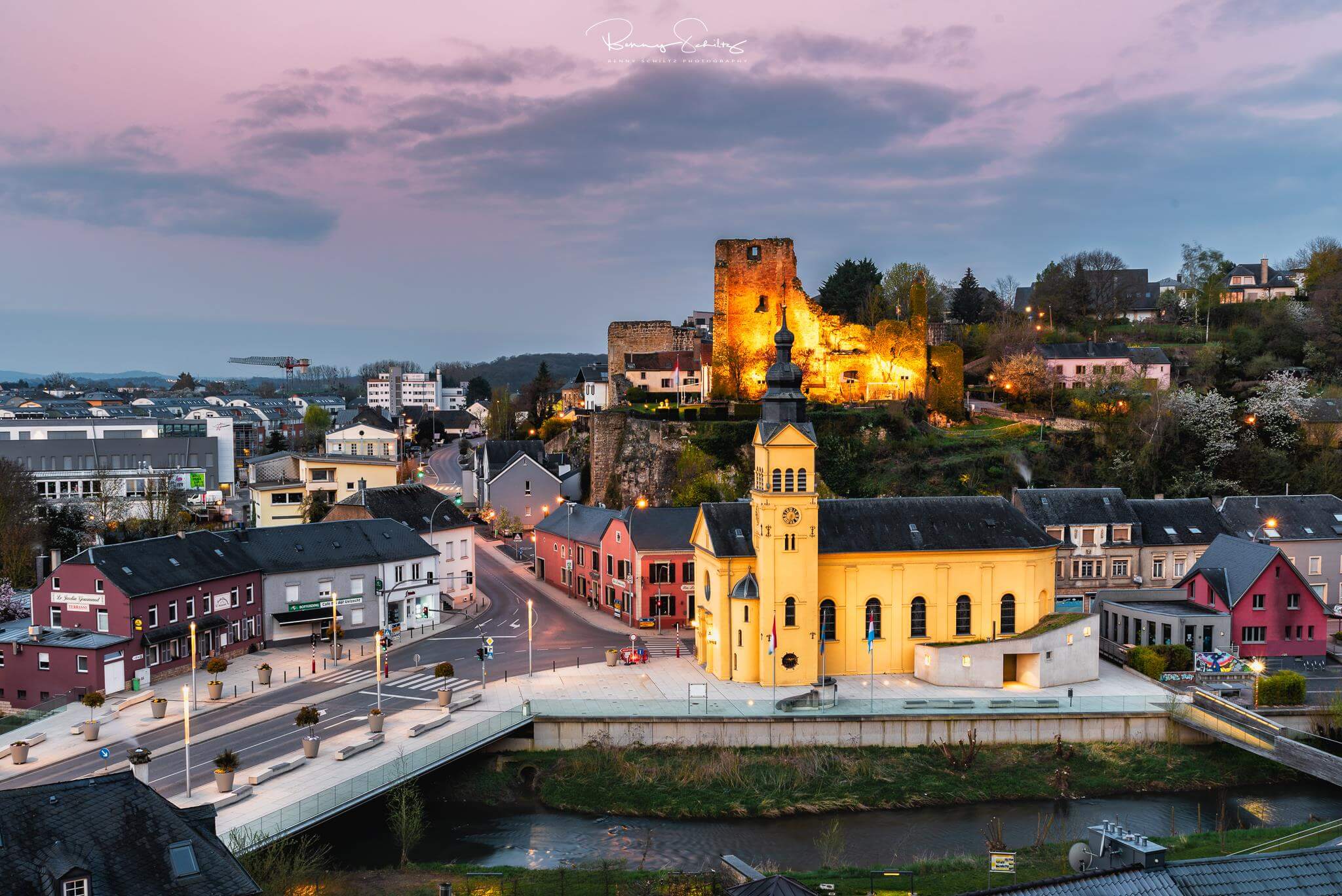
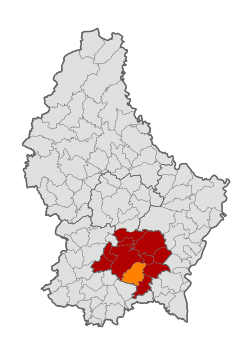
Living in Hesperange is not something most people in Luxembourg talk about loudly — and that is part of what makes it worth understanding before you decide where to put down roots. Situated southeast of Luxembourg City, bordering Bonnevoie and the Cloche d’Or district, Hesperange sits close enough to the capital to make daily life convenient and far enough to feel like somewhere distinct. It is the seventh most populous commune in the country, home to around 17,300 residents from 129 nationalities, and currently the only commune outside Luxembourg City where the tram network operates.
This guide covers what actually defines living in Hesperange: its five-village structure, its transport infrastructure, its schools and childcare, its outdoor offer, and the community character that has sustained population growth of nearly 30% over the past fourteen years.
Living in Hesperange: Five Villages, Each Standing on Its Own
Living in Hesperange means choosing between five genuinely different places — not a single town with satellite hamlets. Hesperange commune is one of the only localities in Luxembourg where all five of its constituent villages — Howald, Alzingen, Hesperange village, Itzig, and Fentange — each exceed 1,000 inhabitants. That balance matters practically: every village has its own infrastructure, community services, and character, rather than the more common pattern where one centre dominates and the rest depend on it.
Howald
Howald is the most urban and connected of the five villages. It has the tram, the train station, and direct access to the A1 motorway via the Victor Bodson Bridge — a cable-stayed structure spanning 260 metres across the Alzette River valley, completed in 1993 and the commune’s most recognisable landmark. Howald is the natural choice for professionals who commute daily to Luxembourg City and want to minimise that friction. It is also mid-transformation — its business park is being restructured into a mixed-use residential and commercial district, which will change the neighbourhood’s character materially over the 2026–2028 period.
Alzingen
Alzingen sits between Howald’s urban density and the quieter residential pace of the outer villages. It has the commune’s highest property prices — a reflection of its established neighbourhood character, mature tree-lined streets, and the mix of houses and larger apartments that suits families in a stable phase of life. Living in Hesperange’s Alzingen sub-commune tends to appeal to those who want proximity to the city without the noise of it.
Hesperange Village
The administrative heart of the commune, Hesperange village has a genuine village feel — a pace and scale that distinguish it from the more suburban character of Alzingen and Howald. The commune’s administrative services are based here, and the community is tighter-knit than in the larger sub-areas. Property is more varied in condition and age, offering a wider range of price points than elsewhere in the commune.
Itzig
Itzig is where a significant share of the commune’s expatriate families with children end up. The combination of larger houses with gardens, a quiet residential atmosphere, and proximity to international schools makes it the dominant choice for families relocating from abroad. Supply is consistently tight — properties here move quickly — and the community has a strong sense of continuity, with many long-term residents who chose Itzig for the schools and stayed for everything else.
Fentange
Fentange is the most rural of the five villages, bordering open countryside and offering the largest plots and most spacious houses in the commune. It attracts buyers and renters who make a deliberate choice for space and quiet without leaving the commune’s infrastructure behind. It also has the most affordable rental prices within Hesperange — a function of its rural character and larger property formats — making it attractive for households that want value without sacrificing location quality.
Transport: One of the Strongest Practical Arguments for Living in Hesperange
Transport infrastructure is one of the defining practical advantages of living in Hesperange, and it is infrastructure that most comparable Luxembourg communes simply do not have.
Howald is currently the only location outside Luxembourg City where Line 1 of the Luxembourg tram operates. Three stops serve the commune — Lycée Bouneweg, Howald Scillas, and Howald Gare — connecting residents directly into Luxembourg City’s tram network without changing lines or waiting for bus connections. For daily commuters, this is a meaningful quality-of-life difference from communes where the bus is the only public option.
Howald Gare also provides CFL rail connections on Line 6. Current timetables and route maps are available on the CFL website. The combination of tram, train, and extensive bus coverage — with services running every few minutes during peak hours — means living in Hesperange without a car is genuinely viable for most daily journeys.
For those who drive, direct motorway access puts the airport, the Kirchberg plateau, and the southern communes within straightforward reach.
Schools and Childcare When Living in Hesperange
For families considering a move, the school and childcare infrastructure is one of the strongest practical arguments for living in Hesperange over neighbouring communes of similar size.
The commune has 11 crèches distributed across all five villages — two public facilities and nine private options, covering a range of educational philosophies and care approaches. Notable providers include L’Enfant Roi (Montessori-inspired), La Luciole, Rockids Fentange (eco-conscious care with outdoor space), Les Petits Tournesols in Itzig, Crèche Némo et Cie in Alzingen, and BabyHome Howald. The breadth of choice means families can match childcare to their values and schedule rather than taking whatever is available closest to home.
Five public primary schools (écoles fondamentales) serve each village, complemented by Maisons Relais providing structured after-school care. A full list of schools, crèches, and Maisons Relais is maintained on the official Hesperange commune website. The École Fondamentale Howald-Couvent holds a particular distinction: it was the first school in Luxembourg built with local wood, accommodating 140–150 children aged 4–6 in a purpose-designed environment that has since influenced school construction standards across the country.
For secondary education and international schooling, the commune’s position near Luxembourg City gives families access to a full range of options within a short commute. This school infrastructure is one of the primary reasons Itzig has the retention rate it does — families who arrive for the schools tend to stay for the community that builds around them.
A Community of 129 Nationalities: What It Means for Living in Hesperange
Living in Hesperange means living in one of Luxembourg’s most internationally diverse communities. Approximately 54% of the commune’s 17,300 residents are non-Luxembourgish, drawn from over 129 nationalities — a diversity profile that reflects the composition of Luxembourg’s financial sector, European institutions, and multinational professional workforce.
The practical effect of this diversity is felt in everyday life in ways that matter to newcomers: multilingual services are the norm rather than the exception, integration into community life happens faster when a significant share of your neighbours are also navigating an adopted country, and the social infrastructure — sports clubs, parent networks, neighbourhood associations — is accustomed to welcoming people who arrived recently from somewhere else.
For expatriate families and internationally mobile professionals, this community character is one of the more underappreciated advantages of living in Hesperange. The commune does not feel like a place where newcomers stand out — it feels like a place that has been built, incrementally, by people who chose to be here from somewhere else. That makes the transition considerably easier than moving to a more homogeneous commune where international residents are the exception rather than the norm.
Outdoor Life: What Living in Hesperange Offers Beyond the Commute
Living in Hesperange is not only about commute times and school places. The commune has an outdoor offer that distinguishes it from more urbanised Luxembourg locations of comparable size and connectivity.
The Alzette River runs through the commune, and the cycling and running trails along its banks connect directly to Luxembourg City’s Grund district — one of the capital’s most scenic areas. These are routes that residents use for daily runs and commutes, integrating outdoor activity into ordinary life rather than separating it from it. The municipal park provides green space within easy reach of all five villages, and the Alzette also hosts the Kayak Club Hesper, which organises local fixtures including the Critérium de l’Alzette.
For cycling in particular, living in Hesperange has one specific draw that residents mention consistently: Andy Schleck Cycles in Itzig, the bike shop owned by the 2010 Tour de France winner, housed in a renovated farmhouse where championship trophies and jerseys share space with the equipment. It is the kind of detail that tells you something about the texture of life here — specific, slightly surprising, and genuinely local.
What Living in Hesperange Means for Property Decisions
The community, infrastructure, and lifestyle factors covered in this guide are not separate from property decisions — they are what drives demand in this market, and what has sustained population growth of nearly 30% over the past fourteen years despite property prices that sit among the highest in Luxembourg outside the capital.
Buyers who understand what living in Hesperange actually offers make better purchase decisions. They know which village fits their priorities, they understand why Itzig commands a premium for houses, and they recognise why Howald’s current development phase is both a risk and an opportunity. For a detailed view of current prices by sub-commune and the market outlook for the period ahead, our Hesperange real estate market analysis covers the data in full.
For buyers at the start of their search, our real estate Hesperange overview covers what to know before you begin. For the financial side — acquisition costs, energy performance, and financing — our guide to avoidable costs when buying property in Luxembourg and our financing property in Luxembourg article are useful starting points. And for the complete buying process from first viewing to notary, our buy property in Hesperange guide covers every step.
Living in Hesperange in 2026: What to Take From This Guide
Living in Hesperange rewards the people who looked carefully enough to find it. It is not Luxembourg’s most prominent commune, and it does not market itself loudly. What it has instead is a combination of advantages — five distinct and fully serviced villages, the only tram service outside Luxembourg City, eleven crèches, strong schools, trails along the Alzette, and a community of 129 nationalities that has learned how to welcome newcomers — that is genuinely difficult to replicate elsewhere in the country at a comparable price point.
The population growth of the past three decades is not a coincidence. People arrive in Hesperange for a specific reason — a school catchment, a commute route, a property they found online — and they stay because the whole turns out to be worth more than any single part of it.
We work exclusively across all five villages of Hesperange commune, representing buyers and sellers. If you want to understand what living in Hesperange looks like for your specific situation — which village fits your priorities, what the market offers at your budget, and what the buying process involves — get in touch for a straightforward conversation with no obligation.


 English
 Français
 Deutsch
 Luxembourgish
Join The Discussion